
Monica McCormick
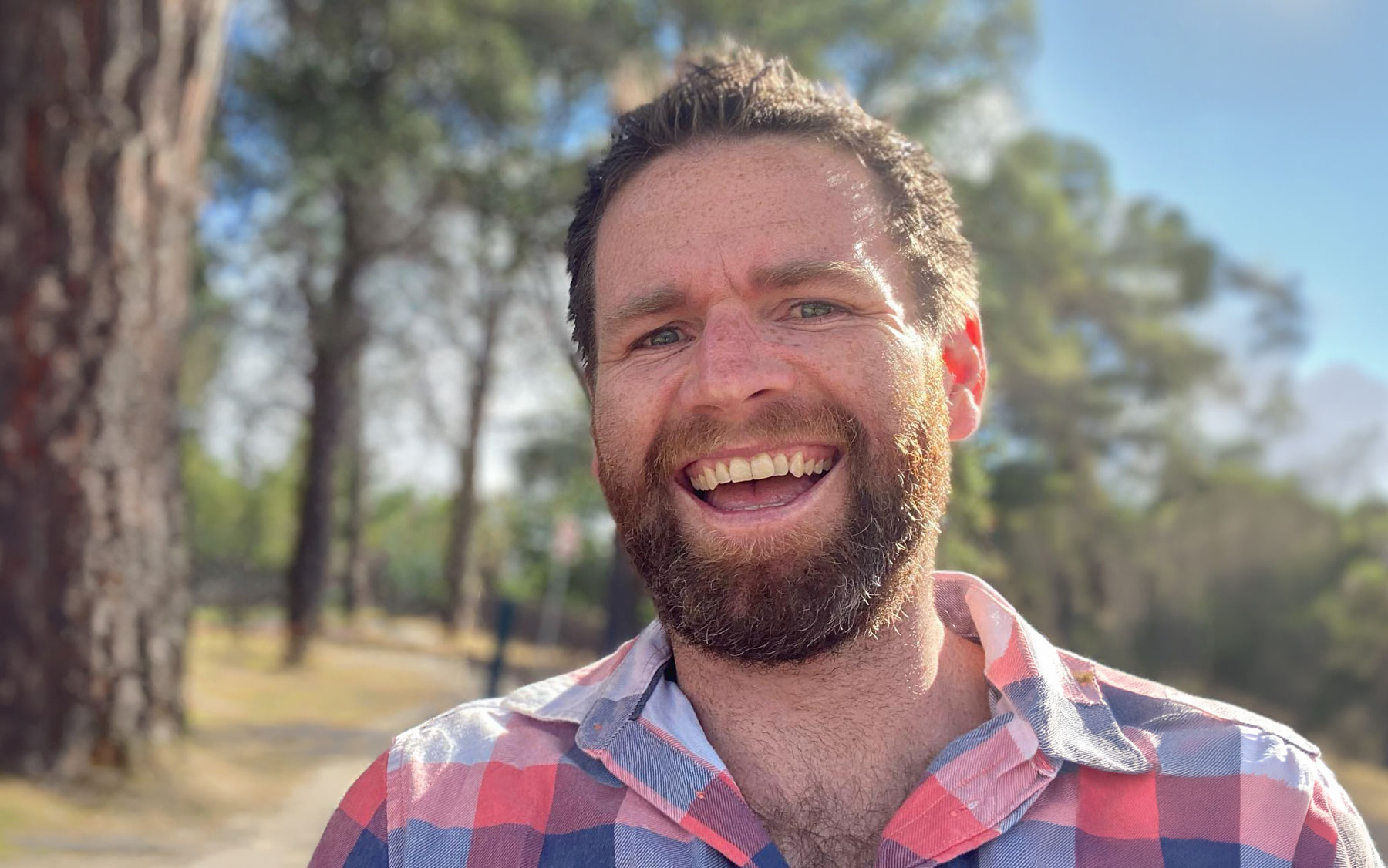
Chris Forrest gets up at 3am. Not because he wants to, but because it's the only time that works. His clients are mostly in the US and Canada, his two kids are both neurodiverse, and for the last five years his day has started in the dark so he can be fully present for school drop-off by 7:30am. That rhythm—building systems that work with his brain rather than against it—is the foundation of everything he does.
After his gym closed during COVID and the high-ticket, high-pressure sales world burned him out completely, he rebuilt around two businesses: the Neurodiverse Dad Operating System, helping ND parents build health, fitness, relationships, and prosperity without fighting their own neurology, and Stealth Authority, where he coaches other coaches on content marketing and sales that pull people in rather than pressure them out.
To run both, he needed a platform that did what he preaches: reduce friction, let the client flow through without needing motivation just to find the next thing. He went through Everfit, Quick Coach, Circle, Mighty Networks, Heartbeat, and Skool before stumbling across Movement in a Google search. Within a weekend, he had his MVP live. Since then, he's brought a soccer coach, a gym owner, an osteopath, and a TeamBuilder client along for the ride—and he's only getting started.
Can you tell us about your businesses and who you help?
I've got two businesses. One's going through a rebrand—it's called Space Builders at the moment, but I'm pivoting towards the Neurodiverse Dad Operating System. The idea was around helping parents build more space in their life. It came from my own experience: I was undiagnosed bipolar 2 and ADHD, creating all these tools I was using as a busy dad. And then after a while, I started getting through diagnosis and going to therapy, and they were like, "These tools will be perfect for lots of neurodiverse parents." So I'm moving towards health, fitness, relationships, and prosperity—building enough space and building their perfect average day.
The other one is Stealth Authority. When my gym got closed during COVID, I went all in on the high-ticket, high-pressure sales approach, and it absolutely cooked me. It just didn't work with my neurodiverse brain. I'd go really well and then crash and just want to hide in a cave and burn out, then do it again. So it was rebuilding systems to work in a way that worked with my brain. Stealth Authority is the answer to that: gravitational pull instead of pressure. Content marketing, Meta ads, and on the side, I build apps and Movement websites for the coaches I work with.
"I had so many people that wanted to work with me but couldn't financially. I need to create something affordable for my community."

How did you find Movement, and what were you using before?
I've gone through Team Builder, Everfit, QuickCoach—when it was John Goodman's, that was a big one. When that got sold, I posted like crazy in the QuickCoach group telling everyone to come over to Movement.
I bounced around a lot of tools trying to find the right thing. Everything was great visually but the back end for coaches was a nightmare. And QuickCoach just didn't have enough customization. I can't even remember how I stumbled across Movement—I think I was just searching through Google and it came up. When I got in there, the customization was the thing that made me go, "This is fantastic." And over time the upgrades have just kept happening.
I also tried things like Heartbeat, Circle, Mighty Networks—all those things to try and get the community side working alongside the workout apps. It was just bouncing between the two and neither really worked. Movement brought it together.
"I also tried Heartbeat, Circle, Mighty Networks—all those things to try and get the community side working alongside the workout apps. It was just bouncing between the two and neither really worked… Movement brought it together."

What made Movement the right fit?
The courses were the first thing—the ability to build them the way you want in Movement. Most other platforms can kind of do it, but you end up doing it somewhere else anyway because you need more flexibility. Being able to build courses with group comments on each one, group chats, all of that tied to each page inside your own app—that was the first thing that brought me over to Movement.
And then literally the ability to change the app buttons (or tabs) at the bottom to almost whatever you want. Even the coaches I'm bringing over now go, "That's what they've been hunting for all along." Their own unique experience for when clients come in.
With every other app, you always have to change what you know you want your clients to do to match the app. With Movement, whatever you think the journey should be, you can almost build it verbatim.
"Whatever you think the client journey should be, you can almost build it verbatim in Movement."

What was the building experience like on Movement? How long did it take you get your app set up?
A weekend. I found Movement, set up the MVP really quickly, and the course content transferred over faster than I expected—that's always the hardest part with any other app. Building the workouts was super fast because there was a massive library to pull from. I didn't have to go hunting for too many exercises.
I remember coming upstairs after a 3am start—I'd been up for three hours. My wife had just got up. I went on about Movement and how good it was and what I was going to use it for. She's like, "Cool, just chill." Two days later I said, "I already moved everything over." She said, "Of course you did." Then I showed it to her and she said, "Yeah, okay. I get it." She always tests my apps because she's someone who doesn't naturally like training. So if she plays with an app and it feels effortless, that's the sign.
"All these apps are the same. But then talking to Movement is different. You guys genuinely love what you've done. That's what I get from Movement."

Why does friction matter so much in your coaching philosophy, and how does Movement help?
In-person coaching, it doesn't matter how much friction there is—they're paying you to motivate them, that's it. That's why in-person is so easy to sell. But online, as soon as there's friction, they're out. So we have to figure out a way to reduce it.
If your coaching creates friction, they'll leave. It's got to be so easy for them to do the work—come in, do this, tell us what you did, come in, do this, tell us what you did. If it's all on the same app, it makes it so much easier.
Movement lets you do it per niche. It can be different for every single person that comes in. With Everfit, it's always like "this is how it looks" - there's no customization. With Movement you can build the client journey the way you see it in your head. The least amount of willpower and motivation they need to get stuff done, the better.
"Movement lets you tailor it per niche. It can be different for every single person that comes in. With Everfit, it's always like "this is how it looks" - there's no customization. With Movement you can build the client journey the way you see it in your head."

What types of coaches are your bringing over to Movement and why?
Usually I go through what they're using now and what parts really suck for them. What is the thing causing them the most friction? That usually flows into whether their clients are actually using it or not.
There's a local osteopath who pays for a huge platform that all the osteos in Australia seem to use—and none of their clients use it. They give out exercises as part of the service and no one does them. I showed him Movement and he's ready to make the switch.
There's a gym owner paying through the nose for a calendar-based tool he got since COVID. He hates technology but he's been paying for it ever since. His clients won't use it and he wants to add nutrition coaching, which that platform just can't do.
And then there are three soccer coaches I'm working with who were building an education platform on Skool—they went in, got distracted and annoyed with the feed, and they were out. I showed them Movement and they said, "Perfect." When I showed them my app they said "Yep, let's go" straight away.
"I go through what [each coach] is using now and what parts really suck for them—then I show them what Movement can do."
What would you tell another coach considering Movement?
Just get in and do the MVP version, then change it as you go. I've changed mine multiple times based on feedback. I think a lot of coaches have perfectionism and want it perfect from day one. Just get in, get it going, get people's eyes on it. If they want it, keep building. If not, tweak it—it's easy to tweak if you haven't spent so much time building it first.
And the support. It's the best I've seen across any app I've been in—and I've been in so many. You get a response within a day. That's a big reason I tell coaches to come over. If you have issues, message support. You'll get an answer fast.
"The support [on Movement] is the best I've seen across any app I've been in—and I've been in so many. That's a big reason I tell the coaches to come over."

Chris Forrest isn't just a Movement creator—he's become one of its most active advocates, bringing coaches, PTs, gym owners, and osteopaths over from Everfit, Skool, TrueCoach, and TeamBuildr one by one.
For any online coach who's burned through platforms looking for something that actually reduces friction rather than creating it, his story is very relevant. The client journey you have in your head? Movement lets you build it verbatim. Check out the Neurodiverse Dad Operating System (PKA Space Builders) to see what that looks like in practice.
⋯
Ready to stop rebuilding your coaching business around whatever platform you're on?
Whether you're on Skool, Everfit, TrueCoach, TeamBuildr, or a combination of them all—and none of them quite does what you need, Movement gives you a single branded app for courses, workouts, community, one-on-one coaching, and more. Built around your client journey, not the other way around. No stitching tools together. No changing your process to match the software.
What is Movement?
Movement is an all-in-one platform that helps coaches, creators, and community builders launch beautifully branded apps and memberships—without needing to be technical or piece together multiple tools.
Whether you're offering courses, events or programs, selling digital products, or hosting a private community, Movement gives you everything you need in one place: content and video hosting, chats, events, directories, and more.
It’s designed to be intuitive for you and seamless for your audience—so you can focus on delivering value, not managing tech.
For coaches who are tired of stitching together tools like Kajabi, Squarespace, and Facebook Groups, Movement offers a simpler, more scalable way to grow your business and deepen client connection—all under your own brand.
Find out more or sign up for a free account here.
Back to all customer stories